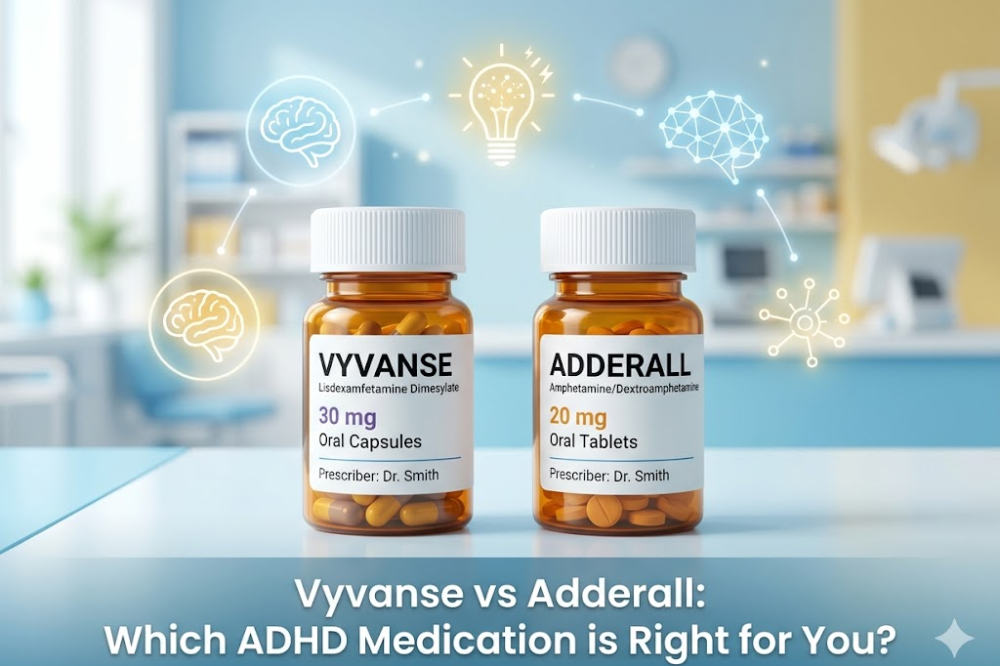
Attention Deficit Hyperactivity Disorder (ADHD) is a common neurodevelopmental condition that affects both children and adults. Stimulant medications are often prescribed to manage ADHD symptoms, helping improve focus, attention, and impulse control. Among the most commonly prescribed medications are Vyvanse and Adderall. While they share similarities, they also have distinct differences that can influence which medication is best for an individual.
What is Vyvanse?
Vyvanse, also known by its generic name lisdexamfetamine, is a stimulant medication used primarily to treat ADHD. It was approved by the FDA in 2007 and has gained popularity due to its longer duration of action and lower potential for abuse compared to some other stimulants. Vyvanse is a prodrug, meaning it is inactive until metabolized in the body. This property allows for a more controlled release, reducing the peaks and valleys often associated with other stimulant medications.
Vyvanse is taken orally, usually once daily in the morning, and its effects can last up to 14 hours. Its slow conversion in the body helps maintain steady symptom control throughout the day, which can be particularly helpful for school-aged children and adults with busy schedules.
What is Adderall?
Adderall, on the other hand, is a combination of amphetamine salts (dextroamphetamine and levoamphetamine). It has been used for decades to treat ADHD and narcolepsy. Adderall comes in two formulations: immediate-release (IR) and extended-release (XR). The IR version typically lasts 4-6 hours, while XR can last 10-12 hours, making dosing flexibility one of its advantages.
Unlike Vyvanse, Adderall is active immediately upon ingestion, producing quicker symptom relief. However, this also means it can have more pronounced peaks and troughs in effectiveness, which some users may find challenging.
Mechanism of Action
Both Vyvanse and Adderall work by increasing the levels of certain neurotransmitters in the brain, mainly dopamine and norepinephrine. These chemicals play a critical role in attention, motivation, and executive function.
- Vyvanse: Converts into dextroamphetamine in the body, producing a gradual increase in dopamine and norepinephrine.
- Adderall: Directly delivers amphetamine salts, which rapidly boost neurotransmitter activity.
The difference in how these medications are metabolized is a key factor in their distinct effects and side effect profiles.
Duration and Effectiveness
One of the most significant differences between Vyvanse and Adderall is their duration of action.
- Vyvanse: 10-14 hours of effectiveness, making it ideal for all-day symptom control.
- Adderall XR: 10-12 hours, slightly shorter than Vyvanse, but still suitable for full-day coverage.
- Adderall IR: 4-6 hours, requiring multiple doses for all-day symptom management.
Effectiveness can vary based on individual metabolism, age, and severity of ADHD symptoms. Some patients may respond better to one medication over the other, highlighting the importance of a personalized treatment plan.
Side Effects and Risks
Both Vyvanse and Adderall are generally well-tolerated, but they do carry potential side effects. Common side effects include:
- Insomnia
- Decreased appetite
- Dry mouth
- Increased heart rate
- Anxiety or jitteriness
Vyvanse’s gradual release mechanism may reduce the risk of sudden spikes in heart rate or blood pressure, which can make it a better option for individuals sensitive to these effects. However, Adderall’s immediate action can provide faster symptom relief, which some patients may prefer despite the higher risk of peaks and troughs in effect.
It is also important to note that both medications have potential for abuse and dependency, particularly Adderall due to its immediate effects. Physicians often monitor patients closely to mitigate these risks.
Dosage Considerations
Dosage for both Vyvanse and Adderall must be individualized.
- Vyvanse: Typically starts at 30 mg once daily, with potential titration up to 70 mg depending on response and tolerability.
- Adderall IR: Often starts at 5 mg once or twice daily, with gradual increases as needed.
- Adderall XR: Starts at 10 mg daily, with adjustments based on symptom control and side effects.
Medical supervision is essential, as dosing requires careful attention to factors like age, weight, and comorbid conditions.
Choosing Between Vyvanse and Adderall
Selecting the right ADHD medication involves considering several factors:
- Duration of action: Vyvanse may be preferable for all-day symptom management, while Adderall IR may be better for targeted, shorter-duration needs.
- Side effect profile: Vyvanse may be easier on the cardiovascular system, whereas Adderall may cause more pronounced peaks and crashes.
- Abuse potential: Vyvanse’s prodrug status reduces the risk of misuse compared to Adderall.
- Cost and insurance coverage: Adderall is generally less expensive and more widely covered by insurance.
Ultimately, the decision should be made in consultation with a healthcare provider, considering both medical history and lifestyle requirements.
FAQ
1. Can Vyvanse and Adderall be taken together?
No, these medications should not be taken together unless specifically instructed by a healthcare provider, as combining stimulants can increase the risk of serious side effects, including heart problems and anxiety.
2. Which is stronger, Vyvanse or Adderall?
“Strength” is subjective and depends on individual response. Both are effective stimulants, but Vyvanse provides a smoother, longer-lasting effect, while Adderall can produce quicker symptom relief.
3. Are these medications safe for adults?
Yes, both Vyvanse and Adderall are FDA-approved for adult ADHD treatment. However, monitoring is necessary, especially for cardiovascular risks and potential for dependency.
4. How long does it take for Vyvanse to start working?
Vyvanse typically takes 1-2 hours to start showing effects due to its prodrug formulation, whereas Adderall IR can take effect within 30-60 minutes.
5. Can these medications cause weight loss?
Yes, decreased appetite is a common side effect, which can lead to weight loss. Patients should monitor nutrition and consult their doctor if weight loss becomes significant.
6. Is one medication less addictive than the other?
Vyvanse is considered less prone to abuse because it must be metabolized in the body before becoming active, reducing the likelihood of rapid, intense highs. Adderall, particularly the IR form, has a higher potential for misuse.
Conclusion
Choosing between Vyvanse and Adderall is a nuanced decision that depends on individual needs, lifestyle, and medical history. Vyvanse offers a longer, smoother duration of action with lower abuse potential, making it suitable for those requiring all-day symptom control. Adderall provides more immediate symptom relief and flexible dosing options but comes with a higher risk of peaks, crashes, and potential abuse.
Consulting a qualified healthcare professional is essential to determine the best ADHD treatment plan. With proper guidance, both Vyvanse and Adderall can significantly improve focus, productivity, and overall quality of life for individuals living with ADHD.