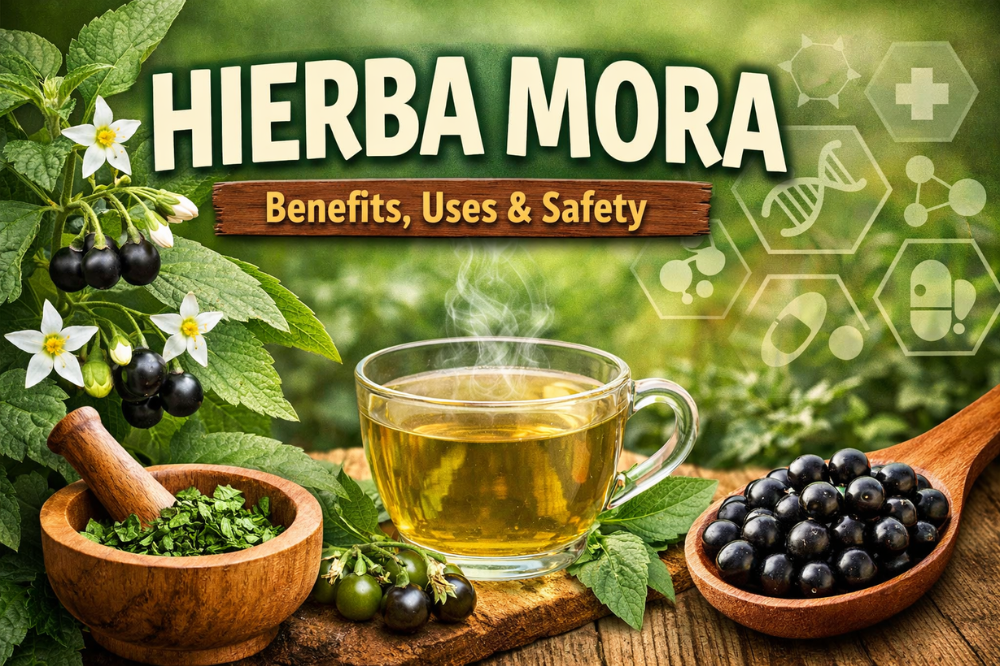
Hierba mora is a well-known medicinal plant used in many parts of the world for its natural healing properties. The name “hierba mora” comes from Spanish and generally refers to plants belonging to the nightshade family, especially the species known as Solanum nigrum. For centuries, people in Latin America, Asia, and parts of Europe have used this plant in traditional medicine to treat various health conditions.
Despite its long history of use, hierba mora remains somewhat misunderstood. Some people consider it a weed, while others value it as a powerful herbal remedy. In this article, we will explore what hierba mora is, its benefits, traditional uses, safety considerations, and why it continues to attract interest today.
What Is Hierba Mora?
Hierba mora is a small herbaceous plant that belongs to the Solanum genus. It typically grows in warm and temperate regions and can often be found in gardens, fields, and along roadsides.
The plant has the following characteristics:
- Small white flowers
- Green leaves with a soft texture
- Tiny berries that turn black when ripe
- A height of around 30 to 60 centimeters
The berries resemble miniature black tomatoes and are often the most recognizable feature of the plant. However, while ripe berries may be edible in some traditions, unripe berries and other parts of the plant can be toxic if consumed incorrectly.
Because of this dual nature—both medicinal and potentially harmful—hierba mora should be used with knowledge and caution.
Traditional Uses of Hierba Mora
For generations, communities have relied on hierba mora as a natural remedy. It has been widely used in traditional herbal medicine to treat various conditions.
1. Anti-Inflammatory Remedy
One of the most common uses of hierba mora is to reduce inflammation. Herbal practitioners often prepare teas or topical pastes from the leaves to help relieve swelling and irritation.
This makes it popular for treating:
- Skin inflammation
- Minor injuries
- Swollen joints
2. Digestive Support
Hierba mora has also been used to support digestive health. In traditional medicine, small amounts of the plant are sometimes prepared in herbal infusions to help relieve stomach discomfort.
It may help with:
- Mild stomach pain
- Digestive irritation
- Gastric inflammation
3. Skin Care and Wound Healing
The leaves of hierba mora are sometimes crushed and applied directly to the skin. Many traditional healers believe it helps speed up wound healing and soothe skin conditions.
It has been used for:
- Minor cuts
- Burns
- Skin rashes
- Insect bites
Potential Health Benefits
Modern researchers have begun studying this to understand its possible health benefits. Some studies suggest the plant contains bioactive compounds that may offer therapeutic effects.
Antioxidant Properties
It contains natural antioxidants that may help protect the body from oxidative stress. Antioxidants are important because they help neutralize harmful molecules known as free radicals.
Anti-Microbial Effects
Certain compounds found in the plant may have antimicrobial properties. This means they could potentially help fight bacteria or other microorganisms.
Liver Protection
In some traditional medical systems, hierba mora is believed to support liver health. While research is still ongoing, early studies suggest that certain compounds may help protect liver cells from damage.
Culinary Uses in Some Cultures
Interestingly, this is not only used for medicine. In several regions, especially in rural communities, the plant is used as a food ingredient.
Young leaves are sometimes cooked and eaten like spinach after proper preparation. Cooking reduces potentially harmful substances and makes the plant safer to consume.
Some cultures use it in:
- Traditional soups
- Herbal stews
- Cooked vegetable dishes
However, proper identification and preparation are essential before using the plant as food.
Safety and Toxicity Considerations
Although it has many traditional uses, it is important to understand that it can be toxic if used improperly.
The plant contains compounds called alkaloids, which may cause symptoms if consumed in large amounts. These symptoms may include:
- Nausea
- Vomiting
- Dizziness
- Stomach pain
Unripe berries are especially dangerous and should never be eaten.
For this reason, herbal remedies made from this should only be used under guidance from knowledgeable practitioners.
Pregnant women, children, and individuals with health conditions should avoid using it without medical advice.
How Hierba Mora Is Prepared
Traditional preparation methods vary depending on the intended use. Some of the most common forms include:
Herbal Tea
Leaves are boiled in water to create a mild infusion that may be used for digestive or inflammatory issues.
Topical Paste
Fresh leaves are crushed into a paste and applied directly to the skin for wound care or inflammation.
Cooked Vegetable
In some cultures, young leaves are boiled and cooked thoroughly before being eaten.
Proper preparation helps reduce potentially harmful substances and improves safety.
Cultural Importance of Hierba Mora
Hierba mora is deeply connected to traditional medicine practices in many communities. In rural areas, herbal knowledge about plants like this has been passed down through generations.
Traditional healers often rely on plants from the Solanaceae family, which includes many important medicinal and edible species.
For people who live far from modern healthcare facilities, plants like this have historically provided accessible natural remedies.
Today, interest in herbal medicine is growing again, leading researchers and herbalists to revisit traditional plants and their potential benefits.
Modern Research and Interest
Scientists continue to study this to better understand its chemical composition and medical potential.
Some areas of research include:
- Anti-inflammatory compounds
- Antioxidant activity
- Potential cancer-fighting properties
- Antibacterial effects
While these studies are promising, more clinical research is needed before the plant can be widely recommended for medical treatments.
Still, the growing interest shows how traditional herbal knowledge can inspire modern scientific exploration.
Conclusion
Hierba mora is a fascinating plant with a long history in traditional medicine and cultural practices. Known scientifically as Solanum nigrum, it has been used for generations to treat inflammation, support digestion, and aid skin healing.
However, it is also a plant that must be used carefully due to its potential toxicity. Proper identification, preparation, and guidance are essential when using this for medicinal or culinary purposes.
As modern science continues to study traditional herbs, it remains an important example of how natural plants can hold both benefits and risks. With the right knowledge, it can continue to play a role in herbal traditions and future research.
FAQs
1. What is hierba mora used for?
Hierba mora is traditionally used for reducing inflammation, supporting digestion, treating minor skin problems, and promoting wound healing.
2. Is hierba mora safe to eat?
Only certain parts of the plant are considered safe when properly prepared. Unripe berries and raw parts of the plant may be toxic.
3. What does hierba mora look like?
The plant has green leaves, small white flowers, and round berries that turn black when ripe.
4. Where does hierba mora grow?
Hierba mora grows in warm and temperate climates and can be found in fields, gardens, and roadside areas.
5. Is hierba mora the same as black nightshade?
Yes, hierba mora commonly refers to the plant scientifically known as Solanum nigrum, though the name may also be used for similar species in some regions.