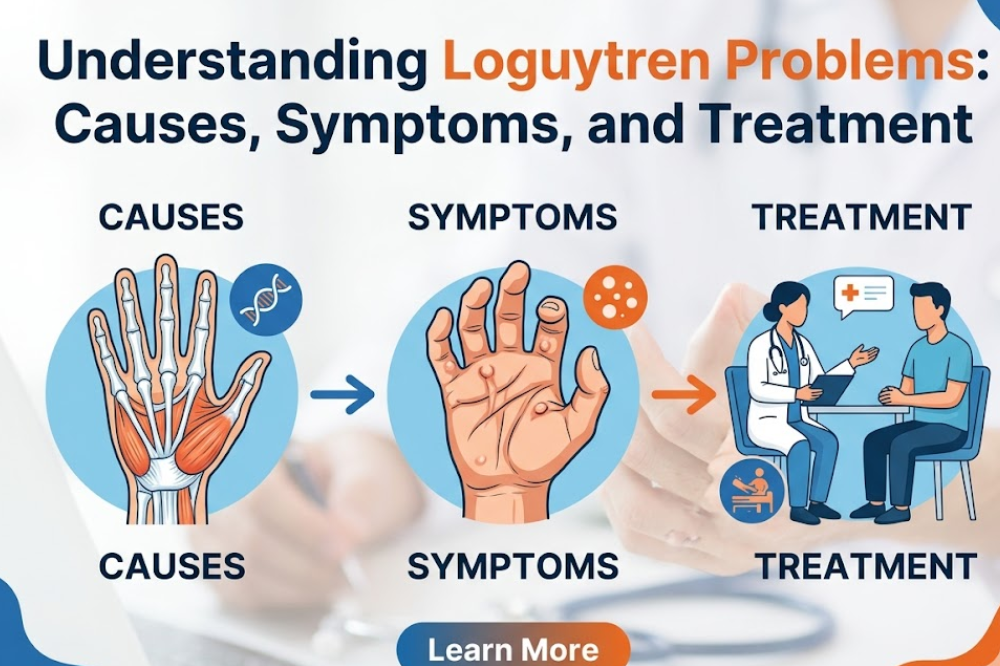
Loguytren problems, often referred to as Loguytren’s contracture, are a condition affecting the hands, specifically the connective tissue beneath the skin of the palm. This medical condition gradually causes the fingers to curl towards the palm, reducing hand function and dexterity. While the exact cause is still under research, it is believed that a combination of genetic, lifestyle, and health factors contribute to its development.
In this article, we will explore the causes, symptoms, risk factors, treatment options, and preventive measures for Loguytren problems, providing a comprehensive guide for anyone experiencing hand stiffness or limited finger movement.
What is Loguytren Problems?
Loguytren problems refer to a progressive thickening and tightening of the fibrous tissue in the palm, leading to contractures of the fingers, most commonly the ring and little fingers. This condition makes it difficult to fully extend the fingers, affecting everyday tasks such as gripping objects, typing, or shaking hands.
Medically, it is classified as a fibroproliferative disorder, meaning the connective tissue grows abnormally. While it often starts slowly with minor lumps or nodules in the palm, the condition can worsen over time if left untreated.
Causes of Loguytren Problems
The exact cause of Loguytren problems is not entirely known, but several factors increase the likelihood of developing the condition:
1. Genetic Predisposition
A family history of Loguytren’s contracture is a significant risk factor. People of Northern European descent are particularly susceptible, suggesting that genetics plays a major role in the onset of this condition.
2. Age and Gender
Loguytren problems are more common in individuals over the age of 40 and affect men more frequently than women. The condition tends to progress slowly and may remain mild for many years.
3. Lifestyle Factors
Smoking and excessive alcohol consumption have been linked to a higher risk of developing Loguytren problems. These lifestyle choices may influence the body’s connective tissue health and worsen contractures.
4. Medical Conditions
Certain health conditions, such as diabetes, epilepsy, or liver disease, are associated with an increased risk of Loguytren’s contracture. It is thought that metabolic and vascular factors may affect the connective tissue in the palm.
Symptoms of Loguytren Problems
The symptoms of Loguytren problems can vary depending on the severity of the contracture. Common signs include:
- Nodules in the palm: Small, firm lumps or bumps under the skin, usually near the base of the fingers.
- Puckering or dimpling of the skin: The skin over the affected area may appear tight or wrinkled.
- Finger contracture: The fingers, especially the ring and little fingers, may gradually bend towards the palm.
- Limited hand movement: Difficulty fully straightening the fingers can interfere with daily activities like writing, gripping, or holding objects.
It is important to note that Loguytren problems are generally painless, which means many people may not seek treatment until the condition significantly affects hand function.
Diagnosing Loguytren Problems
Diagnosis typically begins with a physical examination of the hand. A doctor may check for nodules, cord-like thickening, and contractures in the fingers. In some cases, imaging tests such as ultrasound or MRI may be recommended to assess the severity of tissue thickening.
Early diagnosis is crucial, as prompt treatment can prevent further progression and improve hand functionality.
Treatment Options for Loguytren Problems
Treatment for Loguytren problems depends on the severity and impact on daily life. Options range from conservative measures to surgical intervention:
1. Non-Surgical Treatments
- Physical therapy and stretching exercises: Regular hand exercises can help maintain mobility and slow the progression of finger contracture.
- Splinting: Wearing a hand splint at night may prevent the fingers from curling further.
- Medications: Corticosteroid injections into the nodules may reduce inflammation and slow tissue thickening.
2. Minimally Invasive Procedures
- Needle aponeurotomy: A procedure in which a needle is used to break the cord causing finger contracture, improving finger extension.
- Enzyme injections: Collagenase injections can help dissolve the thickened tissue, allowing the finger to straighten gradually.
3. Surgical Treatment
In severe cases, surgery may be necessary to remove the thickened tissue and restore hand function. Procedures include fasciectomy (removing the affected fascia) or dermofasciectomy (removing fascia and skin). Recovery may involve physical therapy to regain strength and mobility in the hand.
Preventing Loguytren Problems
While it is not always possible to prevent Loguytren problems, certain measures can reduce risk factors and slow progression:
- Avoid smoking and limit alcohol consumption.
- Maintain a healthy lifestyle and manage medical conditions such as diabetes.
- Regularly exercise and stretch the hands to keep fingers flexible.
- Seek early medical evaluation if you notice nodules, tightening, or limited finger movement.
Living with Loguytren Problems
For many individuals, adapting to the limitations caused by Loguytren problems is essential. Ergonomic tools, hand exercises, and occupational therapy can improve daily functioning. Support groups or consultation with hand specialists can provide additional guidance and coping strategies.
FAQs
Q1: Is Loguytren’s contracture painful?
A1: Usually, Loguytren problems are not painful. Most people experience stiffness and limited finger movement rather than discomfort.
Q2: Can Loguytren problems affect all fingers?
A2: While it can theoretically affect any finger, it most commonly affects the ring and little fingers.
Q3: Is Loguytren’s contracture hereditary?
A3: Yes, genetics play a significant role. A family history of the condition increases your risk.
Q4: Can physical therapy cure Loguytren problems?
A4: Physical therapy cannot cure the condition but can slow progression and improve hand mobility.
Q5: When is surgery necessary for Loguytren problems?
A5: Surgery is typically recommended when finger contracture significantly limits hand function or interferes with daily activities.
Conclusion
Loguytren problems are a progressive hand condition that can significantly impact finger mobility and hand function. Understanding the causes, recognizing early symptoms, and exploring available treatment options are essential for managing this condition. Whether through conservative measures, minimally invasive procedures, or surgery, timely intervention can improve outcomes and maintain hand functionality.
By staying informed, practicing preventive measures, and seeking professional care when necessary, individuals with Loguytren problems can maintain independence and quality of life.